Home heating emergency help
No Heat? Check Safety Before You Check the Equipment.
A practical starting point for furnaces, boilers, and heat pumps. Separate thermostat and airflow problems from conditions involving fuel, combustion, hot water, or high voltage.
Start by symptom
What changed?
Do not begin by guessing a failed part. Choose the closest symptom and record what still works, when the problem started, and whether it comes and goes.
No heat anywhere
The thermostat calls for heat but the system stays silent, blows cool air, or never warms the home.
Starts then stops
The burner, heat pump, circulator, or blower begins a cycle but shuts down before the home reaches temperature.
Some rooms stay cold
Heat reaches part of the home but one zone, radiator, register, or floor loop remains cold.
Boiler or pipe noise
Banging, gurgling, whistling, or circulation noise appears during a heating call.
Heat pump struggles
The outdoor unit runs for long periods, backup heat appears, frost persists, or indoor air feels cooler than expected.
Thermostat is blank or wrong
The display is blank, settings change unexpectedly, or room temperature and thermostat reading disagree.
Safe first checks
What you can check before opening equipment
These checks are designed to improve the diagnosis without touching refrigerant circuits, combustion components, high voltage, or moving machinery.
Check carbon-monoxide and smoke alarms. Never ignore an alarm, fuel odor, soot, or anyone feeling ill.
Confirm HEAT mode, setpoint, schedule, batteries, and whether the thermostat is actually calling for heat.
Look for a tripped breaker, an obvious service switch position, or loss of display. Reset a breaker only once.
Inspect accessible filters, supply registers, return grilles, radiators, and furniture blocking airflow.
Confirm whether gas, oil, propane, or electricity service is available without opening fuel components.
Note ignition attempts, pump or blower operation, displayed codes, unusual sounds, odors, and outdoor temperature.
Stop and call a professional when
- You smell gas or fuel, a carbon-monoxide alarm sounds, or anyone feels dizzy, weak, nauseated, or confused.
- There is soot, flame rollout, scorching, smoke, arcing, or repeated breaker or limit trips.
- A boiler is leaking significantly, pressure or temperature appears unsafe, or hot water/steam could escape.
- The repair involves burners, gas valves, flues, combustion analysis, fuel piping, refrigerant circuits, or high voltage.
Better diagnosis
Information worth collecting
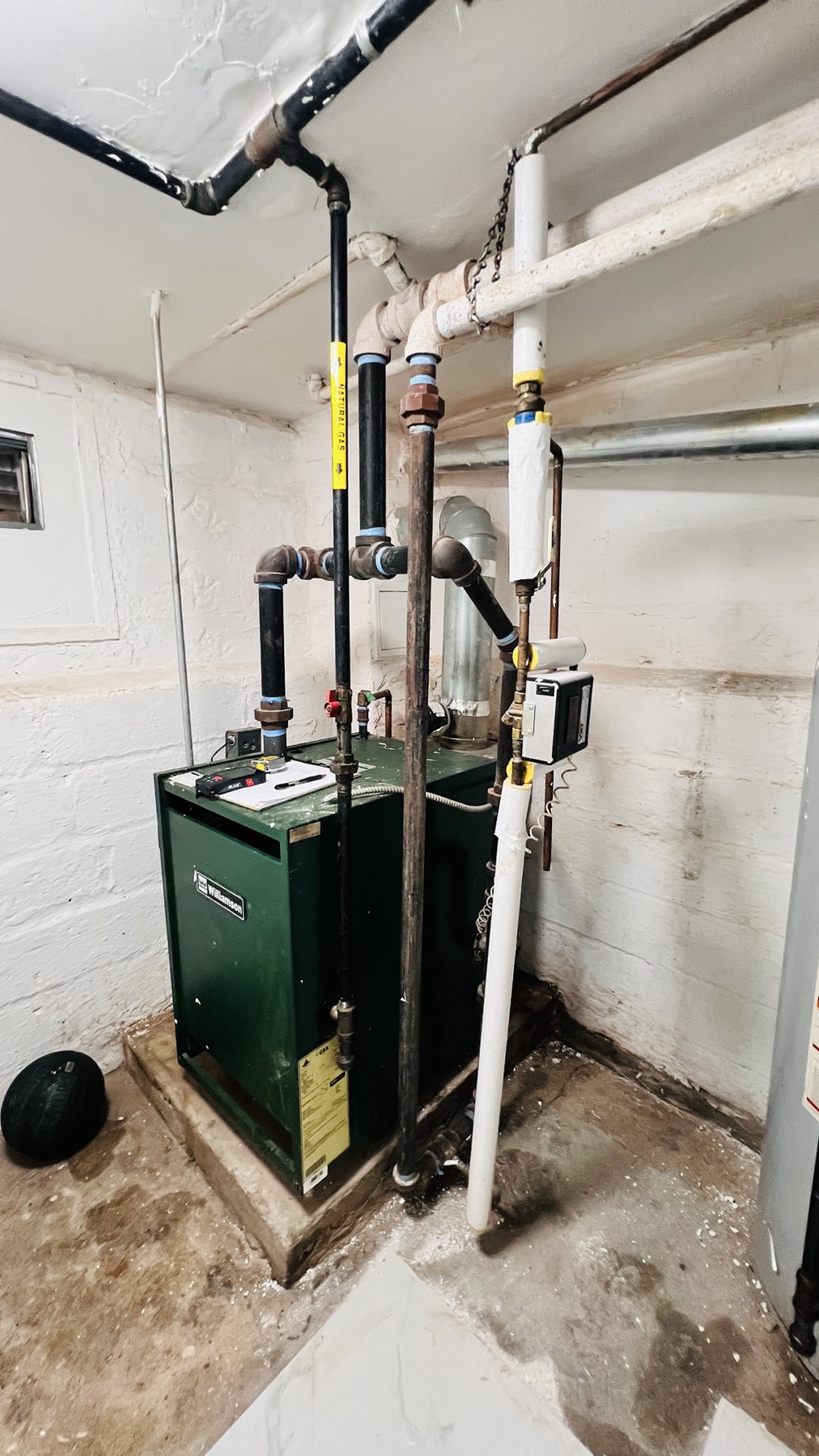
Photograph the thermostat, equipment model and serial label, fault display, gauge readings visible without opening equipment, and any leak or frost. Record the fuel type, outdoor temperature, room temperature, and what components start during a heating call.
The goal is not to prove a part has failed from one clue. It is to give the next person—yourself or a technician—a clear operating picture.
Educational guidance only. Work allowed for homeowners and vehicle owners varies by location. When conditions are unsafe or unclear, stop and use a qualified professional.